
A Homeowner Guide to Metal Roofing Costs

A roof can look fine from the driveway and still be nearing the end of its useful life. Curling shingles, recurring leaks around vents, missing granules, and storm repairs that keep adding up are often the signs that homeowners begin considering a longer-term solution. This homeowner guide to metal roofing explains what to weigh before making that investment, especially for properties facing Midwest snow, wind, summer storms, and changing temperatures.
Metal roofing is not one single product or price point. The profile, material, roof design, installation details, and condition of the existing roof all affect the outcome. A good decision starts with understanding what you are buying and what your home actually needs.
Why Homeowners Choose Metal Roofing
For many property owners, the main appeal is service life. A properly specified and professionally installed metal roof can last decades, often substantially longer than a conventional asphalt shingle roof. It is also highly resistant to wind, sheds snow and rain efficiently, and will not absorb moisture the way some roofing materials can.
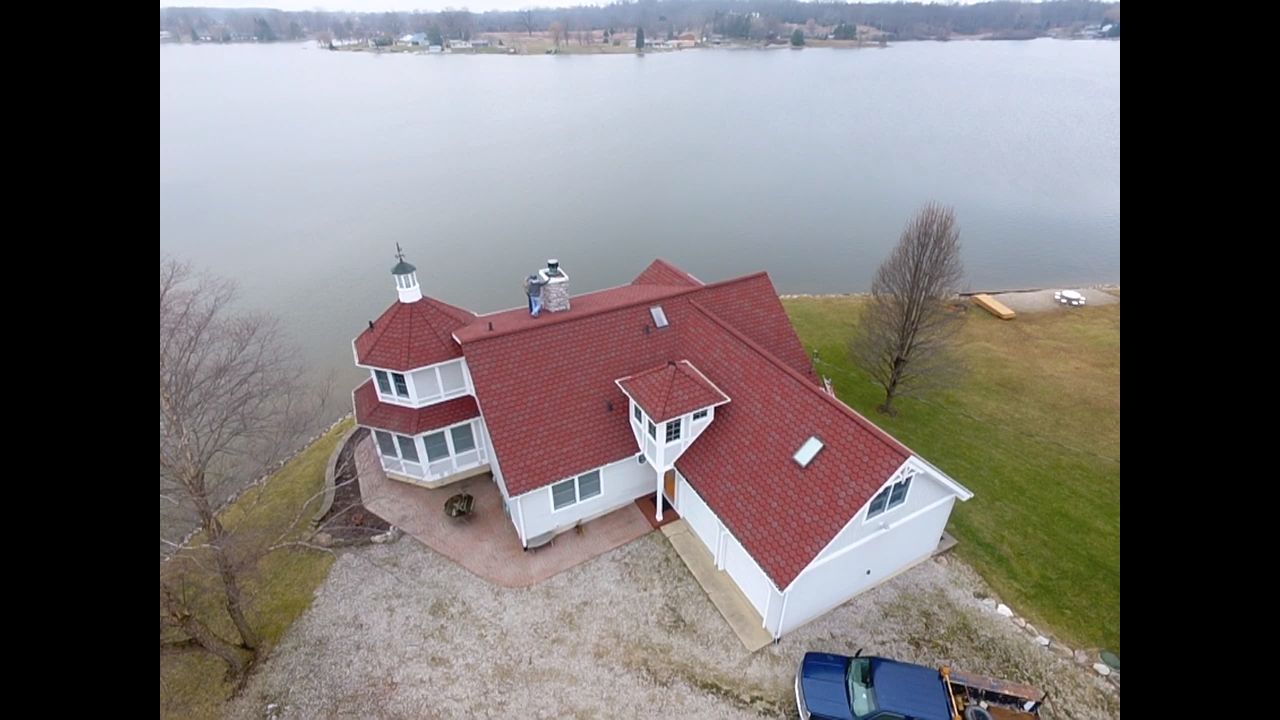
That durability matters in southern Michigan, northern Indiana, and Northwest Ohio, where a roof may see heavy snow one week, freeze-thaw cycles the next, and strong thunderstorms later in the season. Metal roofing can be a particularly sensible choice for homes in open areas, lake properties exposed to wind, and vacation homes where owners want fewer recurring maintenance concerns.
Appearance is another reason homeowners consider metal. Modern systems are available in traditional panels, standing seam profiles, and metal shingles that can complement farmhouses, lake homes, contemporary builds, and more traditional residences. The right roof should protect the home first, but it should also fit the property rather than make it look out of place.
The Main Types of Residential Metal Roofing
Standing Seam Metal Roofing
Standing seam is the premium profile many homeowners picture when they think of a metal roof. Long panels run from the ridge toward the eaves, with raised seams between them. The fasteners are typically concealed beneath the seams, which limits the number of exposed penetration points on the roof surface.
This system offers a clean appearance and excellent weather protection when installed correctly. It is often a strong choice for homeowners planning to stay in their home for many years, as well as remote lake house owners who value a durable, low-maintenance exterior. Standing seam generally costs more than exposed-fastener panels, but the concealed fastening system and refined look can justify the investment for the right property.
Exposed-Fastener Metal Panels
Exposed-fastener panels are a more economical metal roofing option. Screws are visible on the face of the panels and use sealing washers to help keep water out. This profile is common on garages, barns, workshops, sheds, and some residential homes.
The lower initial cost can be attractive, but it comes with a trade-off. Fasteners and washers require attention over time because temperature changes cause metal to expand and contract. Quality materials and precise installation are especially important. This type of roofing can perform well, but homeowners should understand that it does not offer the same concealed-fastener design as standing seam.
Metal Shingles and Other Specialty Profiles
Metal shingles, shakes, and tile-style panels offer another option for homeowners who want the longevity of metal with a more traditional roofing appearance. They can be a good fit in neighborhoods where architectural style is a major consideration. Their installation is more detailed than long-panel systems, so labor costs may be higher depending on the product and roof complexity.
What Metal Roofing Really Costs
Metal roofing usually has a higher upfront price than standard asphalt shingles. That difference is real, and a trustworthy contractor should address it directly rather than promise that metal is automatically the best choice for every home.
The final price depends on the metal type and gauge, panel style, roof size, pitch, number of valleys and penetrations, chimney and skylight flashing, tear-off needs, decking repairs, insulation or ventilation work, and job-site access. A simple ranch roof with broad, uninterrupted planes is generally less costly per square foot than a steep roof with dormers, multiple transitions, and difficult access.
When comparing estimates, look beyond the bottom line. Ask whether the proposal identifies the roofing system, underlayment, flashing, ventilation work, trim, tear-off, disposal, and any allowance for damaged decking. A lower price may leave out necessary details that later become change orders or weak points in the finished roof.
It also helps to consider ownership time. If you expect to sell soon, an asphalt shingle roof may be the more practical financial decision. If this is a long-term home, family property, or lake house you plan to keep for decades, metal may offer better value over the life of the roof. Financing can also make a long-term roofing decision more manageable without delaying a needed replacement.
A Homeowner Guide to Metal Roofing Performance
A metal roof does not make a home noisier by itself. When installed over proper sheathing, underlayment, attic insulation, and interior ceilings, rain noise indoors is often comparable to other roofing types. The idea that every rainstorm will sound like it is hitting a barn roof is usually based on metal installed over open framing, not a complete residential roofing assembly.
Metal can also be energy efficient, particularly when the roof color, attic ventilation, insulation, and installation method are considered together. Reflective finishes may reduce solar heat gain, but a roof alone cannot solve an underinsulated attic or poor ventilation. The most dependable approach is to evaluate the entire roof and attic system.
Snow management deserves special attention. Metal sheds snow readily, which can reduce prolonged moisture exposure on the roof. It can also mean snow releases in sheets, potentially creating hazards near entryways, walkways, driveways, decks, or lower roof sections. Snow guards may be recommended in specific areas to control how and where snow comes off the roof.
Hail is another point where details matter. Metal is durable, but it is not immune to cosmetic dents from severe hail. Some products resist impact better than others, and the appearance of minor denting may matter more on certain panel styles or colors. Discuss local storm history, insurance coverage, and product ratings before choosing a system solely for its hail resistance.
Installation Details Matter More Than the Panel Color
Even the best metal panel can fail early if it is installed over a compromised roof deck or flashed incorrectly. Valleys, chimneys, skylights, sidewalls, vents, and transitions to other roofing materials are where workmanship becomes most visible. These are not places to cut corners.
Before installation, the contractor should assess the existing roof deck and determine whether a full tear-off is appropriate. In some situations, metal may be installed over an existing roof system, but that is not always the best answer. Hidden deck damage, trapped moisture, extra weight, and the need to properly inspect flashing are all reasons a tear-off may be recommended.
Underlayment selection also matters. A high-quality underlayment provides a secondary layer of protection under the metal panels. Ice and water protection may be needed in vulnerable areas, particularly along eaves, valleys, and roof transitions where ice dams or wind-driven rain can create added risk.
For homes with complicated roof lines, experience is worth paying for. A contractor should be prepared to explain the scope in plain language, identify potential decking concerns before work begins, and communicate promptly if conditions change after the old roof is removed. Carbon Construction Company approaches roofing work with that broader construction perspective, which is valuable when a roof replacement reveals related trim, ventilation, siding, or structural needs.
Choosing a Color and Finish That Will Age Well
Color is a long-term decision. Neutral shades such as charcoal, bronze, black, gray, and earth tones often work well across changing exterior styles. Lighter colors can help reflect sunlight, while darker colors may better suit a historic, wooded, or traditional property. Consider siding, brick, window trim, gutters, and nearby outbuildings before making a final selection.
Ask about the paint finish and warranty, not just the color sample. A quality finish should be designed to resist fading, chalking, and weathering. Keep in mind that color can appear different in full sun than it does on a small indoor sample. Viewing larger samples outdoors can prevent an expensive surprise.
Care, Repairs, and Questions to Ask
Metal roofs are low maintenance, not no maintenance. A homeowner should periodically look for loose trim, damaged sealant around penetrations, debris in valleys, and branches rubbing against the panels. After a major storm, a visual inspection from the ground and a professional evaluation when needed can help identify issues before they become leaks.
Before signing a contract, ask who will perform the installation, whether the crew has experience with the specific metal system, how flashing details will be handled, what warranty applies to materials and workmanship, and how change orders are communicated. For vacation or lake house owners who are not always on-site, ask how progress updates, photos, and final documentation will be provided.
The best metal roof is not simply the most expensive panel or the lowest bid. It is the system that matches your home, your budget, your expected ownership timeline, and the weather conditions it must handle. A careful inspection and a clearly written scope give you a far better starting point than choosing from a color chart alone.


Comments