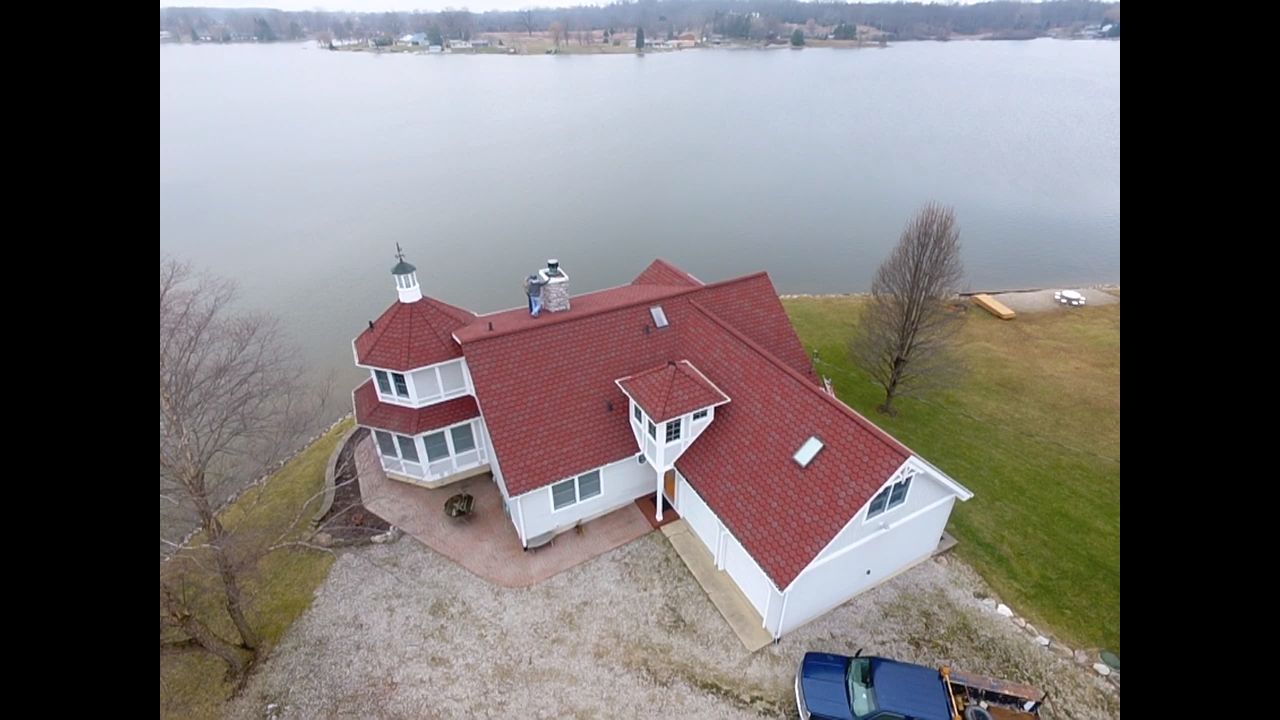


Best Roofing Materials for Lake Houses Compared

A lake house roof faces a different kind of wear than a home tucked into a neighborhood. Open water can amplify wind, humidity lingers around the structure, and winter snow and ice can stay on the roof longer than expected. For owners comparing the best roofing materials for lake houses, the right answer is usually the one that protects the home through every season while fitting its architecture, budget, and maintenance expectations.
In southern Michigan, northern Indiana, and Northwest Ohio, lake properties also tend to be viewed from the water. That makes roofing a practical investment and a major part of the home’s appearance. A roof needs to look right from the dock, but it also needs to stand up to wind-driven rain, falling branches, freeze-thaw cycles, and the occasional storm that arrives while the owner is miles away.
What a Lake House Roof Needs to Handle
Lakefront conditions put pressure on every part of a roofing system, not just the visible roof covering. Wind can lift poorly installed shingles and drive rain beneath vulnerable flashing. Moisture can find its way into attic spaces, especially in seasonal homes that are closed up for long periods. Heavy snow, ice dams, and repeated freezing can create leaks around valleys, eaves, chimneys, and skylights.
A quality roof for a lake home starts with the full system: sound decking, proper underlayment, ice and water protection where needed, balanced attic ventilation, dependable flashing, and skilled installation. Even the best material cannot perform as intended if these details are overlooked.
Property owners should also consider access. If a roof requires frequent attention, that may be inconvenient for a vacation property or a home that sits vacant part of the year. A lower-maintenance material can provide real peace of mind when you are not able to inspect the property after every storm.
Best Roofing Materials for Lake Houses
Standing seam metal roofing
For many lake homes, standing seam metal is the strongest long-term option. Its clean vertical panels, concealed fasteners, and crisp appearance complement everything from modern lakefront builds to traditional cottages and renovated cabins. More importantly, it is designed to shed rain and snow efficiently and can perform exceptionally well in high-wind conditions when installed correctly.
Because the fasteners are hidden beneath the panel seams, standing seam metal avoids the exposed screw pattern found on some other metal systems. This reduces potential points of water entry and creates a more refined finish. The material is also highly durable, with a service life that can extend for decades.
Metal roofs are not maintenance-free, but they generally require less ongoing attention than many alternatives. Homeowners should still have flashing, penetrations, sealants, and any areas near trees inspected periodically. Color selection matters as well. A lighter color can help reflect summer heat, while a darker color may better suit the home’s style and surrounding landscape.
The main trade-off is upfront cost. Standing seam metal typically costs more than asphalt shingles, particularly on roofs with complicated valleys, dormers, or transitions. For a primary residence or a lake property intended to stay in the family, the longer service life and reduced maintenance can make that investment worthwhile.
Asphalt shingle roofing
Architectural asphalt shingles remain a practical and attractive choice for many lake house owners. They offer strong value, a broad range of colors and profiles, and a familiar look that works well with traditional homes. A quality architectural shingle can provide dependable protection without the higher initial investment of standing seam metal.
Shingles are especially appealing when a homeowner wants to replace an existing roof efficiently, coordinate with nearby structures, or keep a renovation budget focused on several improvements at once. A lake house may also need siding, windows, decking, porch repairs, or interior updates. Choosing shingles can leave room in the budget for those important projects.
The key is to select a quality shingle rated for the local weather conditions and have it installed as a complete system. Wind resistance, proper nailing patterns, starter shingles, ridge ventilation, ice and water barrier, and correct flashing all matter. In areas that regularly see lake-effect snow or strong storm winds, installation details are every bit as important as the shingle brand.
Asphalt shingles generally have a shorter lifespan than metal, and they may require replacement sooner when exposed to heavy weather and tree debris. Still, they are a dependable option for owners who want a proven roof at a more moderate price point.
Exposed-fastener metal panels
Exposed-fastener metal roofing can be an economical way to gain some of the advantages of metal. It is often used on garages, sheds, boathouses, workshops, and simpler lake structures. On the right home, it can also be a reasonable choice for the main roof.
Its lower cost comes with a trade-off. The fasteners remain visible and use washers that need periodic inspection over time. Temperature changes cause metal panels to expand and contract, so fastening and detailing must be handled carefully. For a highly visible primary residence, many owners prefer the appearance and lower-maintenance design of standing seam metal.
This material makes the most sense when budget is a leading concern, roof geometry is straightforward, and the owner understands the need for occasional maintenance. It can be a useful solution, but it is not automatically the best fit simply because it is metal.
Cedar shakes and specialty roofing
Cedar shakes can create a classic lakeside look, especially on rustic cottages and older properties. The texture is hard to duplicate, and the material can age beautifully in the right setting. However, wood roofing needs regular care and is more vulnerable to moisture, moss, insect activity, and fire concerns than metal or asphalt.
For most lake house owners in this region, cedar is a style-driven choice rather than the most practical one. It may be appropriate for a carefully maintained property with a specific architectural vision, but owners should be prepared for more maintenance and potentially higher long-term costs.
Synthetic slate, composite shake, and other specialty materials can also offer distinctive looks with improved durability. Their suitability depends on roof structure, local availability, budget, and installation requirements. These products are worth discussing when appearance is the top priority, but they should be evaluated with the same care as any major exterior investment.
How Roof Shape and Home Use Affect the Decision
The same material can perform differently from one lake house to another. A simple gable roof with wide overhangs is easier to roof and maintain than a complex design with multiple dormers, valleys, skylights, and chimneys. Complex roofs have more transition points, which means more places where installation workmanship matters.
A seasonal cabin also has different needs than a year-round home. If the property is vacant through part of the winter, durability and low maintenance may carry extra weight. If it is a full-time residence, energy efficiency, attic ventilation, and long-term comfort may be more central to the decision.
Tree cover should be part of the conversation. A house surrounded by mature oaks or pines may receive more branch debris, leaf buildup, and shade. In that situation, regular gutter cleaning and roof inspections are essential regardless of material. Trimming branches back from the roof can prevent unnecessary damage during windstorms.
Do Not Overlook Ventilation and Ice Protection
Lake house roofing problems are often blamed on the roof covering when the real issue is inside the attic. Warm, moist air escaping from the living area can contribute to condensation, wood rot, mold growth, and ice dams. Proper insulation and balanced intake and exhaust ventilation help manage that risk.
At the eaves, valleys, and other vulnerable areas, ice and water barrier adds another layer of protection against water backing up beneath the roof covering. Quality flashing around chimneys, walls, pipe boots, and skylights is equally important. These components do not receive much attention in a color sample or showroom display, but they are where many roof leaks begin.
A contractor who understands lake properties should look beyond surface materials and assess the roof as a complete system. That includes checking for soft decking, past water damage, ventilation concerns, and structural details that may affect the finished roof.
Choosing a Contractor for a Remote Lake Property
For owners who do not live at the lake year-round, communication is part of the roofing job. You need a contractor who can develop a clear scope, document conditions before work begins, explain material options honestly, and keep you informed as the project moves forward.
Ask how the contractor handles unforeseen decking repairs, weather delays, cleanup, and final inspection. A detailed proposal should identify the roofing material, underlayment, ventilation approach, flashing work, and any expected repair allowances. It should also make clear what is included rather than leaving important details open to interpretation.
Carbon Construction Company works with lake house owners throughout the region who need that level of planning and accountability, whether the project is a straightforward roof replacement or part of a larger exterior renovation.
The best choice is rarely the cheapest roof on the estimate. Choose the material and system that fit how you use the home, how long you plan to own it, and how much confidence you want when a hard rain rolls across the lake.


Comments