

Best Siding Options for Moisture-Prone Homes

A wet wall is rarely just a siding problem. Water may be entering at a failed seam, around a window, beneath trim, or through a roof-to-wall transition. For property owners across southern Michigan, northern Indiana, and Northwest Ohio, choosing the best siding options for moisture means looking beyond the face of the siding and making sure the entire exterior wall system can shed water, dry properly, and hold up through freeze-thaw weather.
The right choice depends on your home, budget, maintenance expectations, and the amount of exposure it receives. A protected neighborhood home has different needs than a lake house facing wind-driven rain, shade, snow buildup, and long periods without an owner on-site.
What Makes Siding Good in Wet Conditions?
Moisture-resistant siding does not mean water never touches it. Every siding material gets wet. The real question is what happens afterward. Can the siding resist absorbing water? Will it crack or swell during winter temperature swings? Does the installation provide a path for water to drain away rather than remain trapped behind the panels?
A dependable siding project starts with details that are often hidden once the work is complete: a weather-resistive barrier, correctly integrated flashing, sealed penetrations, proper trim installation, and adequate clearance from roofs, decks, soil, and concrete. Even a premium siding product can fail early if these details are skipped.
For homes near lakes, heavily wooded lots, or areas that see frequent storms, it also helps to choose a material that does not rely on constant repainting or aggressive maintenance to control moisture damage.
Best Siding Options for Moisture: A Practical Comparison
Vinyl siding: a cost-effective, water-resistant choice
Vinyl siding remains a practical option for many homeowners because it does not absorb water, rot, or require painting. It is available in a wide range of colors and profiles, and it can provide strong value when installed over a properly prepared wall system.
For a typical home with sound sheathing and good drainage details, vinyl is one of the most affordable ways to improve exterior protection and curb appeal. It is especially appealing for rental properties, garages, and homeowners who want low routine maintenance.
There are trade-offs. Vinyl can crack when struck in very cold weather, and lower-grade panels may look uneven or become more vulnerable over time. It also expands and contracts with temperature changes, so it must be installed with the correct fastening method and clearance. Fastening it too tightly can cause buckling, while poor trim work can create openings where water reaches the wall behind it.
Fiber cement: strong performance with a more substantial look
Fiber cement siding is often one of the best choices for homeowners seeking the appearance of painted wood with better resistance to rot, insects, and moisture. It is durable, stable, and well suited to the wet springs, humid summers, and freezing winters common in this region.
Unlike wood, fiber cement does not readily swell or decay when exposed to moisture. It can also offer a more solid, traditional appearance than standard vinyl, which makes it a popular choice for older homes, high-visibility renovations, and properties where long-term exterior performance matters.
Its main consideration is installation quality. Fiber cement is heavier and more labor-intensive to install than vinyl. Cuts, joints, edges, and fasteners need to be handled according to the manufacturer’s requirements, and the paint or finish system must be maintained. When installed and finished correctly, it can deliver excellent service for years. When shortcuts are taken, moisture can reach unprotected edges or vulnerable joints.
Engineered wood: a warmer look with modern protection
Engineered wood siding offers the look and texture many homeowners want from real wood, but it is manufactured with treatments designed to improve resistance to fungal decay and moisture. It is lighter than fiber cement, can be easier to install, and often provides a more natural architectural finish.
This material can be a good fit for porches, additions, lake homes, and homes where wood-style lap siding or panel siding is part of the design. It can also work well with decorative trim and board-and-batten accents.
However, engineered wood is not maintenance-free. It requires careful installation, proper flashing, and consistent attention to caulked joints, paint, and clearance from the ground. It should never sit close to wet soil, standing snow, or splashback from poorly directed gutters. If the finish is neglected or water repeatedly reaches exposed edges, damage can develop faster than it would with vinyl or fiber cement.
Metal siding: excellent for water shedding and durability
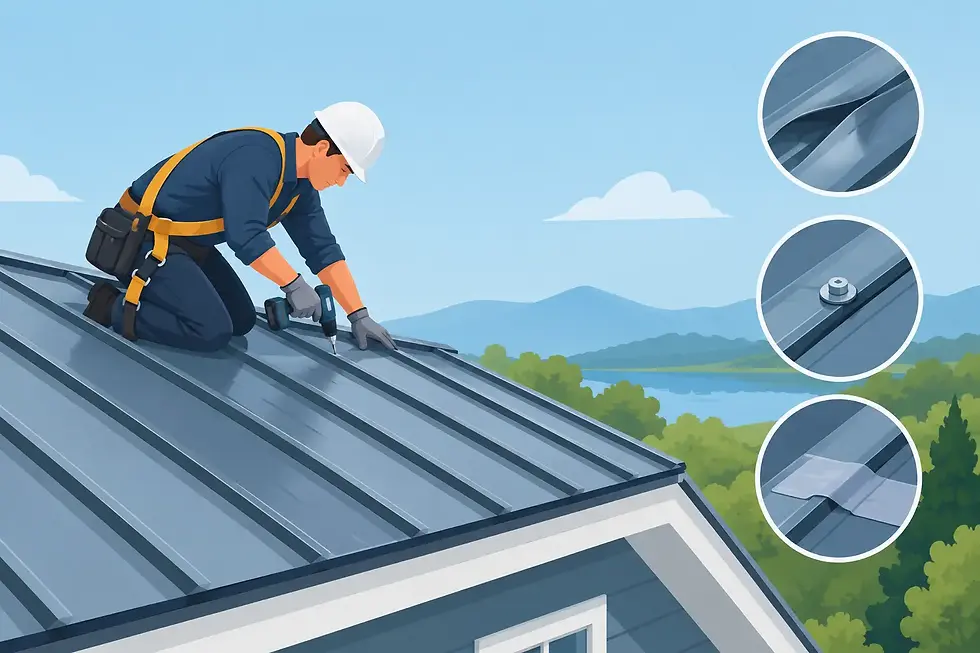
Metal siding can be an outstanding moisture-conscious option, particularly for modern homes, agricultural-style buildings, garages, commercial properties, and lake or vacation properties that need durable exterior protection. Steel and aluminum panels do not rot, and their smooth surfaces shed rain and snow effectively.
The same qualities that make metal roofing dependable can make metal siding a smart exterior choice. Properly coated panels resist corrosion, require little maintenance, and can stand up well to weather exposure. Vertical metal siding is particularly effective at moving water downward and away from the structure.
The important detail is using quality material and correct installation. Scratched coatings, poorly sealed panel transitions, and mismatched fasteners can create future concerns. Metal can also dent from severe hail or impact, although heavier-gauge products offer better resistance. A contractor should also address flashing and transitions carefully where metal siding meets roofing, masonry, windows, and doors.
Natural wood: beautiful, but demanding in damp environments
Wood siding has lasting appeal, especially on historic homes and lake properties. It can be repaired in small sections, painted in nearly any color, and finished with character that manufactured materials cannot fully duplicate.
But wood is generally not among the best siding options for moisture if low maintenance is your priority. It needs regular inspection, painting or staining, and prompt repair of failed caulk, peeling finishes, and damaged boards. In shaded areas where siding stays damp, wood can become vulnerable to rot, mold, and insect activity.
Wood can still be the right choice when appearance is the top priority and the owner is prepared to maintain it. It performs best with generous roof overhangs, well-managed gutters, proper ventilation, and disciplined upkeep.
The Wall Behind the Siding Matters Just as Much
When moisture damage is visible, replacing only the exterior boards or panels may not solve the real issue. Before new siding goes on, the wall should be evaluated for deteriorated sheathing, wet insulation, damaged framing, mold growth, and flashing failures around openings.
This is especially important after wind-driven rain, ice dam leaks, storm damage, or a long-standing gutter overflow. Water can travel behind siding and show up far from the original entry point. A careful inspection helps determine whether the job requires minor repairs, broader restoration work, or replacement of compromised wall materials.
At Carbon Construction Company, exterior projects are approached with the larger structure in mind. That matters when siding repairs connect to roof edges, window replacement, porch additions, water damage restoration, or other parts of the home that affect how water moves.
Installation Details That Protect Any Siding Material
No siding material can compensate for poor water management. A reliable installation should include a properly lapped weather-resistive barrier and correctly installed flashing at windows, doors, roof-wall intersections, and horizontal trim. Gutters and downspouts should carry water away from the foundation rather than discharge against the siding.
Clearance matters, too. Siding installed too close to grade, roof shingles, deck surfaces, or paved areas is more likely to receive repeated splashback and remain wet. Landscaping should not press against the wall or trap moisture around the lower courses of siding.
For vacation homes and lake properties, regular checks are particularly valuable. A small leak can become a major repair when it goes unnoticed through a season of storms or winter weather. Clear communication, documented scopes, and timely updates help remote owners make sound decisions before damage spreads.
Choosing the Right Material for Your Property
If your main goal is affordable moisture resistance with minimal upkeep, quality vinyl siding is often a sensible choice. If you want a more substantial painted finish and are willing to invest in professional installation and periodic paint maintenance, fiber cement is hard to overlook. If you prefer a wood appearance, engineered wood can provide a good balance as long as it is properly finished and maintained. For a modern, highly durable exterior or a building with significant weather exposure, metal siding deserves serious consideration.
The best decision is not always the product with the highest price tag. It is the material that fits your property’s exposure, the condition of the existing walls, your desired appearance, and the level of maintenance you are prepared to provide. Before selecting a color or profile, have the exterior evaluated for the water-management details that will protect your investment long after the new siding is installed.


Comments