

How to Spot Storm Roof Damage Before It Spreads

A storm can leave a roof looking perfectly normal from the driveway while water is already finding its way beneath shingles, flashing, or metal panels. Knowing how to spot storm roof damage early gives you a better chance to prevent a small repair from becoming damaged decking, interior leaks, mold, or a difficult insurance claim.
In southern Michigan, northern Indiana, and Northwest Ohio, roofs routinely face high winds, hail, heavy rain, ice, and falling branches. The right next step depends on what happened, the age and type of roof, and whether you can safely inspect the property. Start with a careful ground-level check, then bring in a qualified roofing professional when the evidence is unclear or the damage appears significant.
Start With Safety, Not a Ladder
After a storm, it is tempting to climb up for a closer look. That is rarely the best first move. Wet shingles, loose granules, wind-lifted materials, and unseen structural damage can make a roof unsafe even for an experienced homeowner.
Walk around the exterior in daylight instead. Bring a phone or camera, and take clear photos of anything that looks unusual. If there are downed power lines, a large tree on the roof, a sagging roofline, or water entering the building, stay clear of the area and arrange emergency help right away.
For a second home or lake property, ask a trusted neighbor or property manager to check from the ground if you cannot get there quickly. A prompt visual record is useful, especially if conditions change before a professional inspection can take place.
How to Spot Storm Roof Damage From the Ground
A complete roof inspection involves more than looking at shingles, but several common warning signs are visible without climbing a ladder. Pay attention to changes that were not present before the storm.
Look for these signs around the roof and yard:
Missing, curled, cracked, or visibly lifted asphalt shingles
Metal panels, ridge caps, or flashing that appear bent, loose, or out of alignment
Shingle pieces, roofing nails, flashing fragments, or unusual amounts of dark grit on the ground
Dented gutters, downspouts, vents, siding, window trim, or outdoor equipment that may point to hail impact
Tree limbs, branches, or debris resting on the roof, gutters, or chimney
A roofline that looks uneven, bowed, or lower in one area than it did before
Wind damage is not always dramatic. Strong gusts can break a shingle seal or lift an edge just enough for wind-driven rain to get underneath. From the ground, that may look like a small raised tab, a crooked ridge line, or a patch of shingles with a different texture or color.
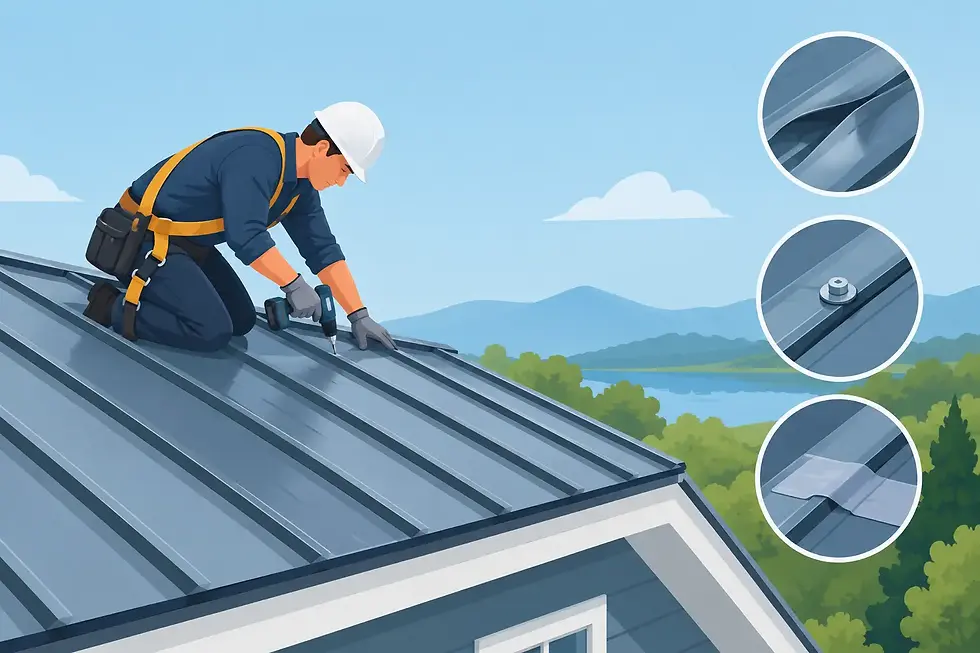
Hail can be even harder to identify. On asphalt shingles, hail impacts may create small dark spots where protective granules have been knocked away. On metal roofing, hail may leave dents or marks. Not every dent affects performance, but it still deserves evaluation, particularly if seams, fasteners, flashing, or protective coatings were affected.
Check the Gutters, Siding, and Other Clues
Your roof is not the only part of the property that tells the storm story. Gutters and downspouts often show clear evidence of hail or wind exposure. Look for fresh dents, loose hangers, separated seams, or gutters pulling away from the fascia.
Check the siding, garage door, window screens, light fixtures, and air-conditioning unit as well. Consistent dents or impact marks across these surfaces can support the case that hail reached the roof. These details may matter when documenting a claim, but they do not replace a roof inspection.
Also look in the gutters for a sudden buildup of asphalt granules. A few granules are normal, especially on an older roof. A heavy accumulation after a storm may suggest that shingles were damaged or that their protective surface is wearing away. Age matters here: a roof near the end of its expected service life may shed granules without a recent storm being the sole cause.
Look Inside the Attic and Upper Rooms
Not all storm damage is visible outside. Once it is safe, inspect the attic with a flashlight. Look for damp insulation, water stains on roof decking, active drips, wet rafters, or a musty odor. Water can travel along framing before it becomes visible on a ceiling, so the source may not be directly above the stain.
Inside living areas, watch for new ceiling discoloration, bubbling paint, peeling wallpaper, or damp spots around vents, chimneys, skylights, and exterior walls. A stain does not always mean the roof itself has failed. It could involve flashing, a vent boot, siding, or condensation. Still, it is a signal to investigate rather than wait for the next rain.
If water is actively entering the home, move valuables away from the area and use a container to catch drips where possible. Avoid puncturing a bulging ceiling unless you understand the safety risks and can do so safely. Water-damaged ceilings can collapse, and electrical fixtures near water require extra caution.
Pay Attention to Flashing and Roof Penetrations
Many leaks begin at the details, not in the middle of the roofing field. Flashing around chimneys, walls, skylights, valleys, plumbing vents, and furnace vents takes a great deal of weather exposure. Wind can loosen it, hail can dent it, and falling debris can bend or displace it.
From the ground, look for flashing that is visibly crooked or separated. Check whether vent caps are missing, cracked, or tilted. If a chimney has loose mortar, a damaged cap, or branches against it, mention that during the inspection. These areas often require a roofing contractor who understands how the roof system connects to the rest of the structure.
Document Damage Before Temporary Repairs Change It
Good documentation can make the repair process clearer for you and your insurer. Take wide photos showing the side of the building and close photos showing each concern. Include damaged gutters, siding, screens, fallen branches, interior staining, and any materials on the ground.
Write down the date and approximate time of the storm, along with what you observed: hail size, wind direction, branches falling, or water entering a room. Keep receipts for reasonable emergency measures, such as tarping or water cleanup.
Temporary protection is often necessary, but avoid signing repair agreements in haste with someone who appears at your door immediately after a storm. A reputable contractor should explain what is damaged, what is uncertain, what can be repaired, and what may need replacement. They should also provide a clear scope of work rather than pressure you to make a same-day decision.
When a Professional Inspection Is Worth Scheduling
Schedule an inspection after a major hailstorm, a period of high winds, a tree impact, or any storm followed by new interior moisture. It is also wise to have the roof checked when your neighbors are finding damage, even if your home looks fine from the street.
A professional can inspect areas that are not safely visible from the ground, including shingle seals, ridge caps, valleys, flashing, fasteners, underlayment exposure, and decking condition. They can also distinguish storm-related damage from normal aging, installation issues, or cosmetic wear. That distinction matters when you are deciding between a targeted repair, a maintenance plan, or a larger roofing project.
For commercial buildings and vacation properties, speed is especially valuable. A small opening can allow water into insulation, wall cavities, inventory areas, or finished spaces long before anyone notices. Property owners who are away from home benefit from photos, a detailed scope, and consistent communication about what was found and what needs to happen next.
Do Not Let a Small Sign Become a Larger Problem
A single missing shingle, a dented vent, or a new ceiling spot may not look urgent. But roofs are systems, and a small weakness can worsen through the next round of rain, wind, freeze-thaw cycles, and snow load. Early repairs are often simpler because they address the damaged area before water reaches the layers below.
Carbon Construction Company helps property owners assess storm-related roof concerns, explain practical repair options, and provide support when insurance documentation is needed. With experienced roofing crews and broader construction capabilities, the focus is on protecting the building as a whole, not simply covering the most visible symptom.
If your roof has been through a hard storm, trust what you can see, document it carefully, and do not ignore what feels different inside the home. A timely inspection can provide peace of mind when the roof is sound and a clear plan when it is not.


Comments